
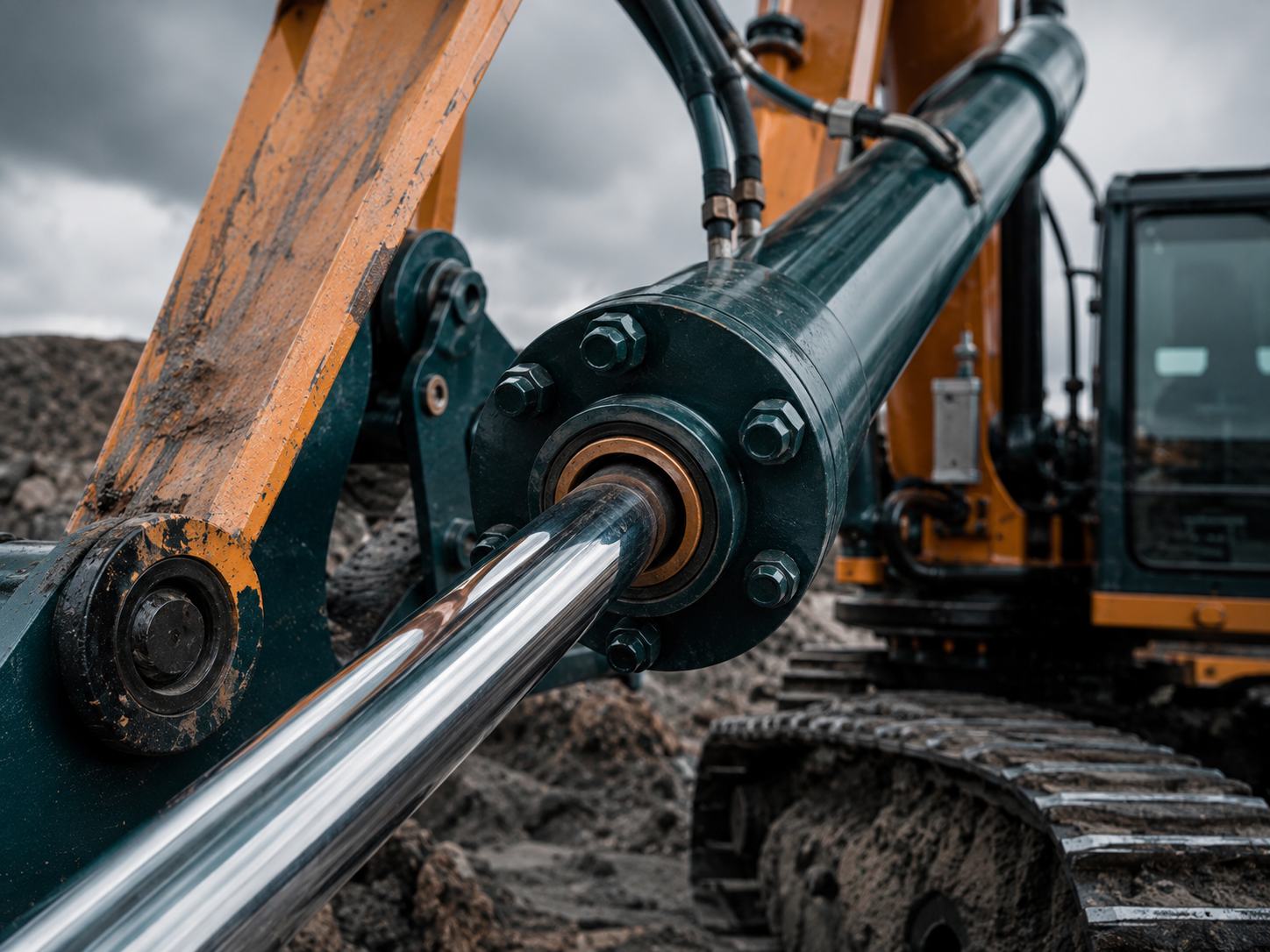
Hydraulic cylinders on excavators, loaders and other heavy equipment often work in much harsher conditions than industrial cylinders. Dirt, water, impact, pressure spikes and rod damage all directly affect seal life.
The wiper is the first line of defence
The wiper prevents mud, sand and moisture from being carried into the cylinder on the rod. A worn wiper can allow contamination to reach the rod seal, guides and hydraulic oil.
Rod seal and buffer seal
The rod seal must retain pressure while allowing smooth movement. In heavily loaded systems, a buffer seal ahead of the main rod seal can help absorb pressure peaks and reduce loading.
Good guidance prevents side-load damage
Machine movement and external forces can load the cylinder sideways. Guide rings should carry these forces so that the rod and piston do not make damaging metal-to-metal contact.
Inspect the chrome rod
Stone impacts, corrosion and scratches can damage new seals rapidly. Clean the rod and inspect the complete stroke area before installing a new sealing set.
Do not choose by size alone
The same dimensions may be available in different materials and profiles. Mobile hydraulics also require consideration of pressure spikes, temperature, speed, contamination and outdoor exposure.
When no clear seal-kit reference exists, machine make and model, cylinder function, rod diameter, bore and photos of the old seals are useful identification data. Hydroseals can use these details to search for individual seals or a suitable seal kit.