
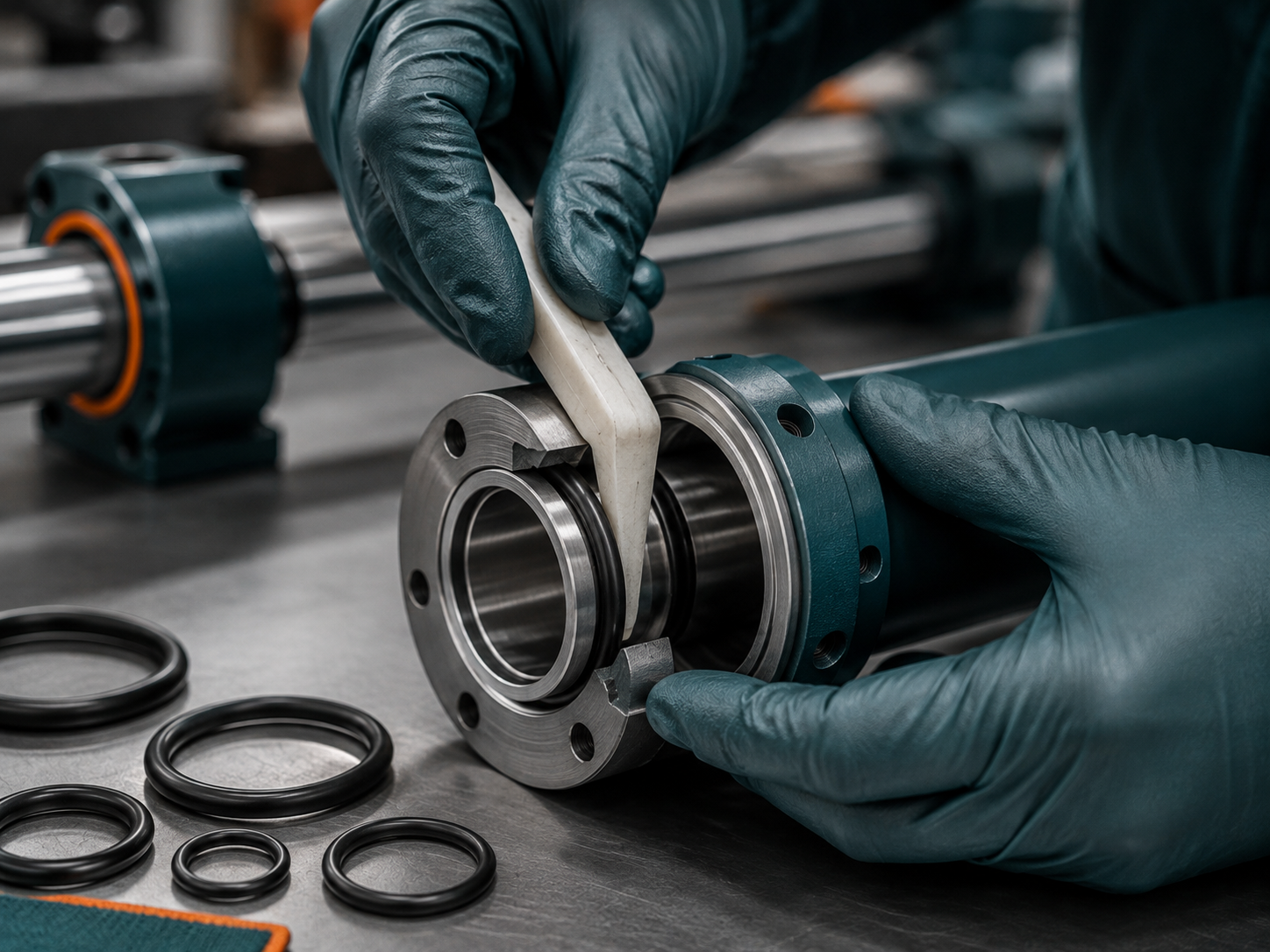
Many hydraulic sealing problems begin during installation rather than in service. A sharp edge, dirty groove or unsuitable tool can damage a brand-new seal before the cylinder makes its first stroke.
Keep everything clean
Clean the cylinder, grooves, rod and installation tools carefully. Metal particles, sand and fragments of old seals can damage the sealing surface and cause leakage later.
Inspect edges and surfaces
Check the rod and bore for burrs, scratches, corrosion and sharp transitions. Protect threads and retaining-ring grooves while sliding seals over them. A simple installation sleeve can prevent a great deal of damage.
Use suitable tools
Prefer rounded or plastic installation tools that do not cut into the sealing material. Stretch seals only as much as required. PTFE and composite seals may need time to recover their shape after installation.
Lubricate carefully
A thin film of compatible assembly or system fluid reduces friction. Avoid unknown greases unless compatibility with both the seal material and hydraulic fluid is confirmed.
Check orientation
Many rod and piston seals have a pressure side. Confirm the profile and installation direction before closing the assembly. A reversed seal may leak immediately.
Avoid twisting the seal and make sure it sits fully and evenly in the groove. Hydroseals can assist when the correct profile, material or installation direction is uncertain.