
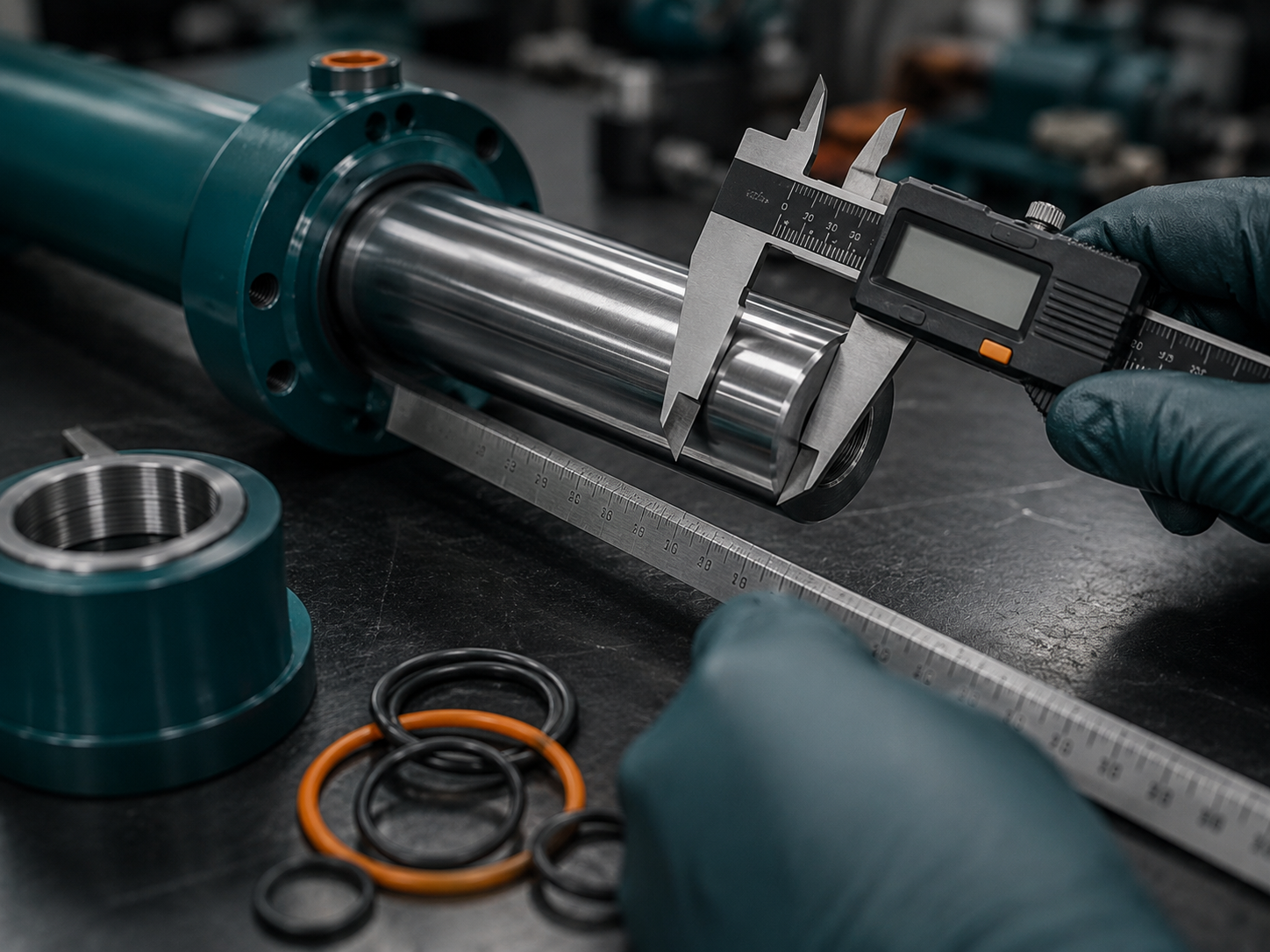
When a nameplate, seal-kit number or original reference is missing, a hydraulic cylinder can often still be identified by measurement. Accuracy matters because even a small difference in groove or rod size can require a different sealing profile.
Start with rod and bore
Measure the rod diameter on an undamaged section and check several positions for wear or ovality. Then measure the cylinder bore or the relevant piston diameter.
Measure the grooves
For a rod seal, the important dimensions usually include rod diameter, groove diameter and groove width. For a piston seal, measure the bore, piston or groove diameter and groove width. Also note chamfers and available installation space.
Measure guidance separately
Guide rings depend on diameter, groove depth and width. If there is clear play, worn guidance should normally be inspected and often replaced together with the seals.
Use the old seal as a clue
An old seal can help identify the profile, but its deformed dimensions should not be treated as exact. Photograph the cross-section, note colour and material clues and verify against the groove.
Record the application
Pressure, temperature, fluid, stroke frequency and speed are just as relevant as dimensions. Heavy mobile hydraulics may need a different profile or material from a slow industrial cylinder.
A clear measurement sheet with photos saves time. Hydroseals can search more effectively when rod, bore, groove dimensions, application data and pictures of the old seals are supplied together.