
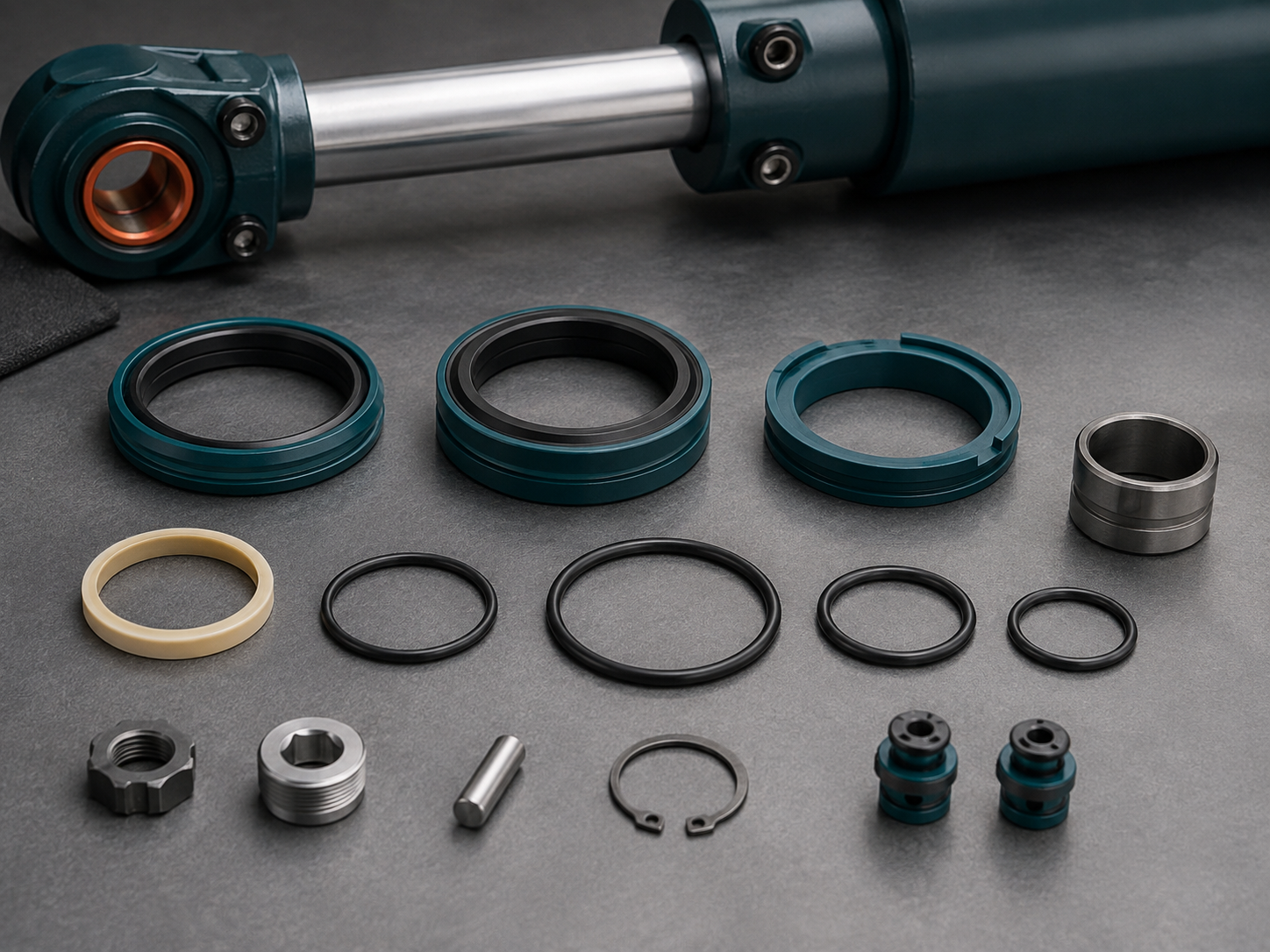
A hydraulic cylinder may look simple from the outside, but several seals and guidance elements work together internally. Each component has a specific task and must suit the pressure, speed, temperature, fluid and cylinder design.
Rod seal
The rod seal keeps hydraulic fluid inside the cylinder while the rod moves in and out. It is one of the most important dynamic seals in the assembly.
Wiper
The wiper sits at the outside of the gland and removes dirt, moisture and dust from the returning rod. It protects the internal seals and hydraulic fluid from contamination.
Piston seal
The piston seal separates the pressure chambers on each side of the piston. In a double-acting cylinder it must seal reliably in both directions of movement.
Guide rings
Guide rings carry side loads and prevent metal-to-metal contact between the rod, piston and cylinder. Poor guidance can cause rapid wear of other seals.
O-rings and backup rings
O-rings are widely used for static sealing between fixed components. At higher pressure, backup rings may be added to prevent extrusion into clearances.
Cushion and supporting components
Depending on the design, a cylinder may also contain cushion seals, buffer seals, retaining rings and other supporting components for end cushioning, positioning and pressure protection.
During overhaul, inspect the complete sealing and guidance system rather than replacing only the visibly leaking seal. A worn guide ring can otherwise damage new seals soon after repair.